myhealthPD.
Mandatory CPD had become a tick-box chore — so a startup founder set out to build the “Netflix for professionals” instead. As Head of Clinical Education & Development, I delivered fifty original courses, a re-referenced clinical library, and clinical direction inside the product team designing the platform itself.
A new platform needed
a new library.
Eduvidd was an early-stage nursing CPD platform with a dated course catalogue and a much bigger ambition: myhealthPD, a subscription platform with its own custom LMS, built with the product team at Aginic Ventures.
A new platform can’t launch on old content. The legacy library needed to be rebuilt — restructured, redesigned and re-verified — while an entirely new catalogue of original courses was authored alongside it.
And because the courses were the product, every one had to hold up commercially: clinically current, visually on-brand, and engaging enough that nurses would pay to keep learning.
Episodic learning,
built for shift workers.
Real screens, live course.
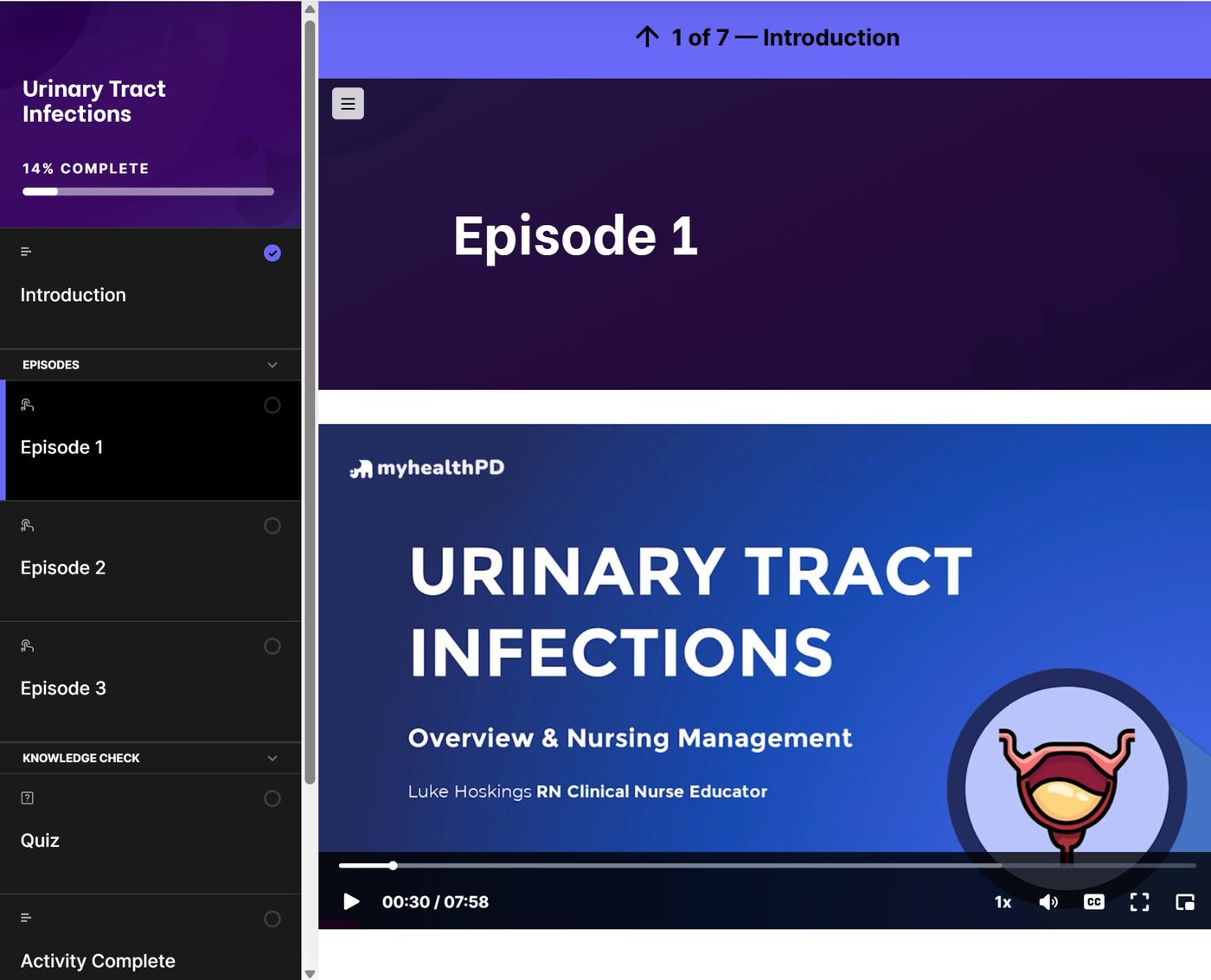
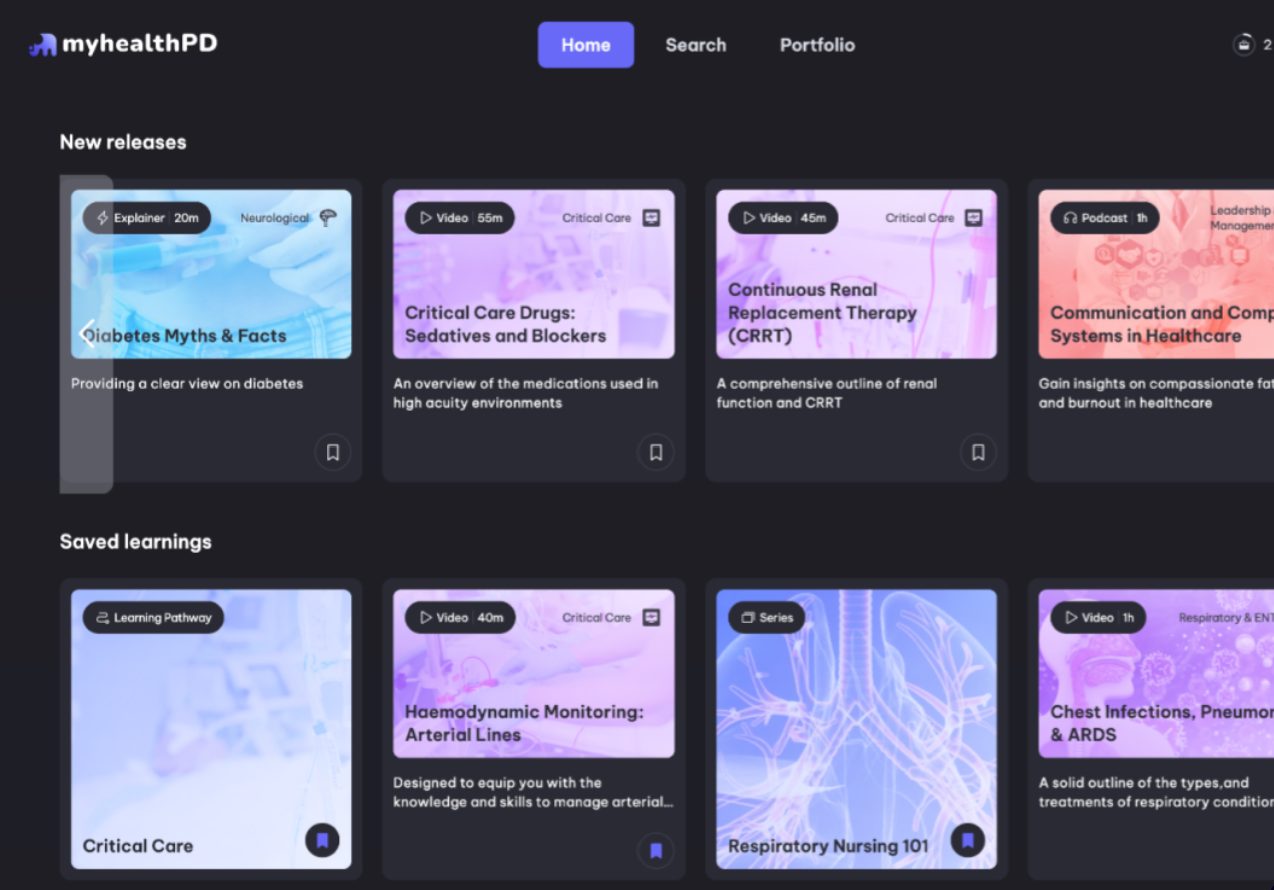
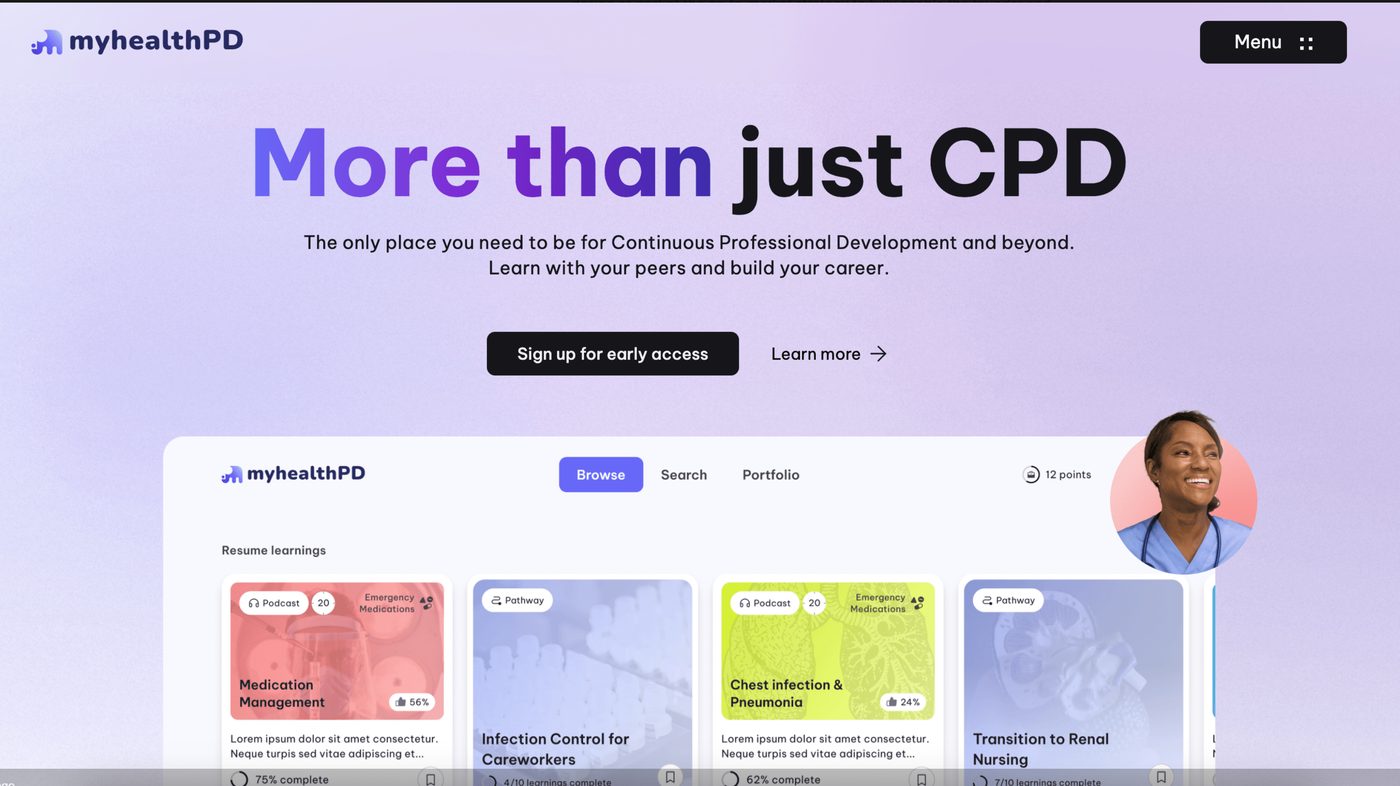
Actual platform and course screens — and a full sample course you can take.


How it came together.
The work ran on two tracks. Track one: fifty original CPD courses authored end-to-end — scripting, visual design, video and knowledge checks — in an episodic format built for how nurses actually study: in short sittings, often on a phone, often at 3am. Track two: the legacy Eduvidd library and a stable of SME presentations, rebuilt to the new brand and re-verified line-by-line against current clinical evidence.
As Head of Clinical Education & Development I also ran the LMS side of delivery, and was the clinical SME embedded with Aginic’s product team — the bridge for specialties, categories and compliance that shaped the platform’s structure, contributing learner-facing UI and interaction ideas carried into the final design.
Each course follows a deliberate rhythm — introduction, video episodes, knowledge check, completion — so learners always know where they are and what’s left. Rise carried the structure; Storyline handled the richer interactions where a topic demanded practice over playback.
The visual layer did the commercial heavy lifting. Dated SME slide decks were re-scripted and rebuilt in Premiere Pro and Photoshop to the myhealthPD brand, so a course recorded by an external educator sat seamlessly beside one authored in-house — one product, one look, three hundred-plus items.
Volume versus rigour. Fifty original courses across a wide clinical spread — from caesarean birth to urinary tract infections — each needed independent referencing before it could ship, because on a paid platform a clinical error isn’t a typo, it’s a product defect.
The second challenge was working as a clinician inside a software team: translating compliance frameworks and specialty taxonomies into product decisions the designers and developers could build against. That collaboration is documented in the team’s own UX case study — worth a read for the other half of the story.
Launched, adopted, acquired.
myhealthPD launched with four major B2B health institutions on board at beta — Mater Health, Talent Quarter, WorkPac and the Nurses Professional Association of Australia — and an average NPS of 9 among subscribers. The company was subsequently sold, and the platform continues to operate under new ownership today: the strongest evidence that the content, and the product around it, held their value.
Receipts · myhealthpd.com · the team’s UX case study