

Instructional design
A blueprint of outcomes, storyboards and assessments, agreed before anything gets built.
How I approach it.
Select any item to reveal the detail.
It starts with what people must be able to do after the training, written as observable actions rather than topics. That one page becomes the contract for every design decision that follows: if a screen does not serve an outcome on it, the screen does not get built.
Structured interviews with subject-matter experts, scoped to cost them hours rather than weeks. I audit what already exists: policies, decks, incident data, the questions learners actually ask. The findings become a short document that is signed off before design starts.
Every screen scripted in a document: on-screen text, narration, visuals, interactions and feedback, each referenced to the outcome it serves. Stakeholders review and mark up in comments. A change here costs minutes; the same change after build costs days.
Branching decisions built around the mistakes people actually make, with wrong answers drawn from real errors rather than filler. Feedback shows the consequence before it explains the principle. Learners rehearse the judgement, not the recall.
Tasks that mirror the real judgement, with a marking guide assessors can apply consistently. Pass marks are set against capability rather than a curve, so a pass means something that can be defended.
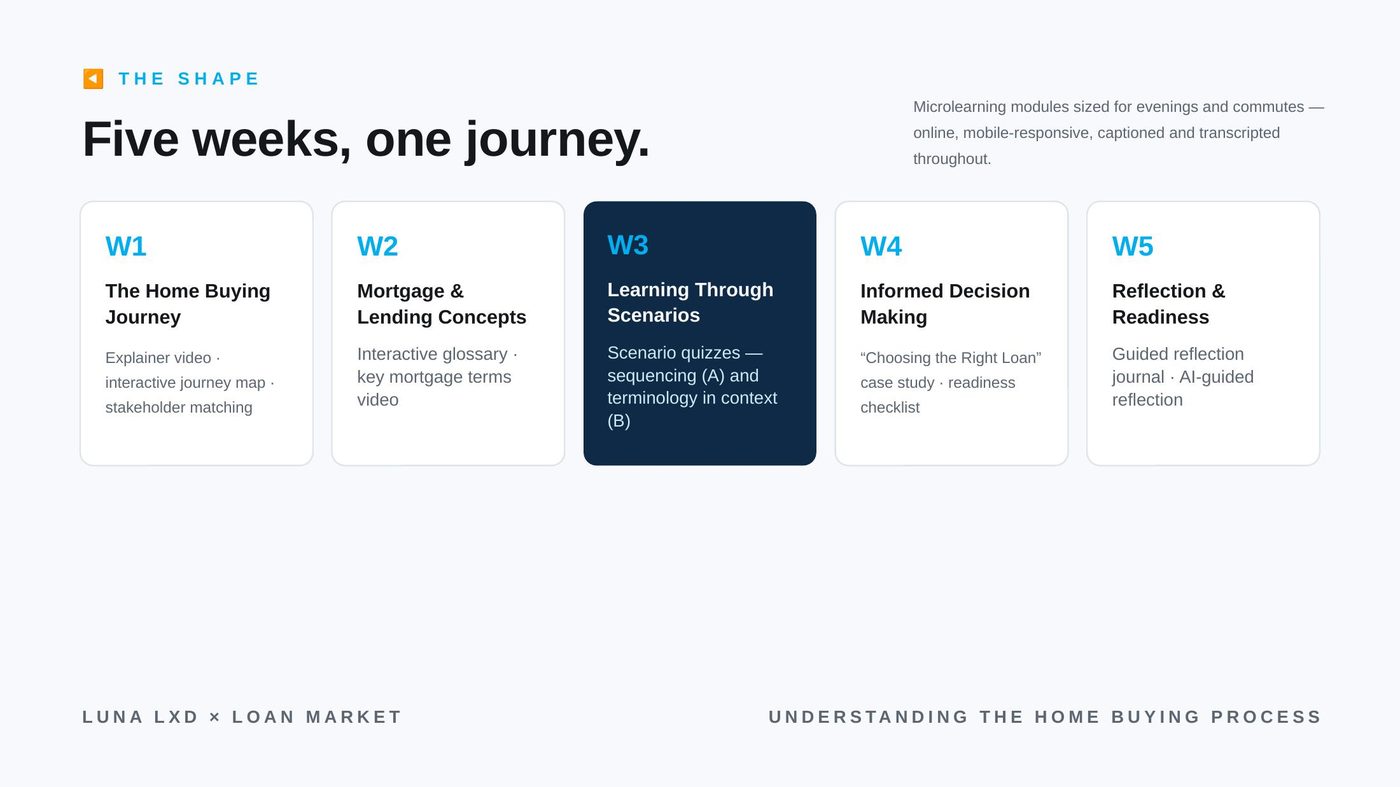 Understanding the Home Buying Process.