

Digital learning development
Working modules, built and tested in the LMS they will live in. Rise, Storyline or custom code.
How I approach it.
Select any item to reveal the detail.
Responsive modules and variable-driven interactions, built exactly to the approved storyboard. Clean masters, consistent components and states, no mystery triggers a future editor cannot untangle. Delivered with source files.
When the authoring tool runs out of road, I build the interaction in code: single-file, dependency-free simulators that drop into Rise or Storyline like an image. The same engine approach sits behind the clinical simulators in my case studies.
Chatbots grounded in the organisation's own documentation, so answers match what it actually says rather than what the internet thinks. Scoped, tested and given honest limits: when it does not know, it says so and points to a human.
Keyboard alternatives for every drag interaction, screen-reader labels, captions, focus order and reduced-motion support. Built in from the storyboard, not patched at the end. WCAG 2.1 AA is the floor, not the target.
Packaged as SCORM or xAPI, uploaded and tested in the real platform, with completion and score reporting verified before launch. Every LMS has quirks; the aim is to find them in testing rather than in production.
Proof.
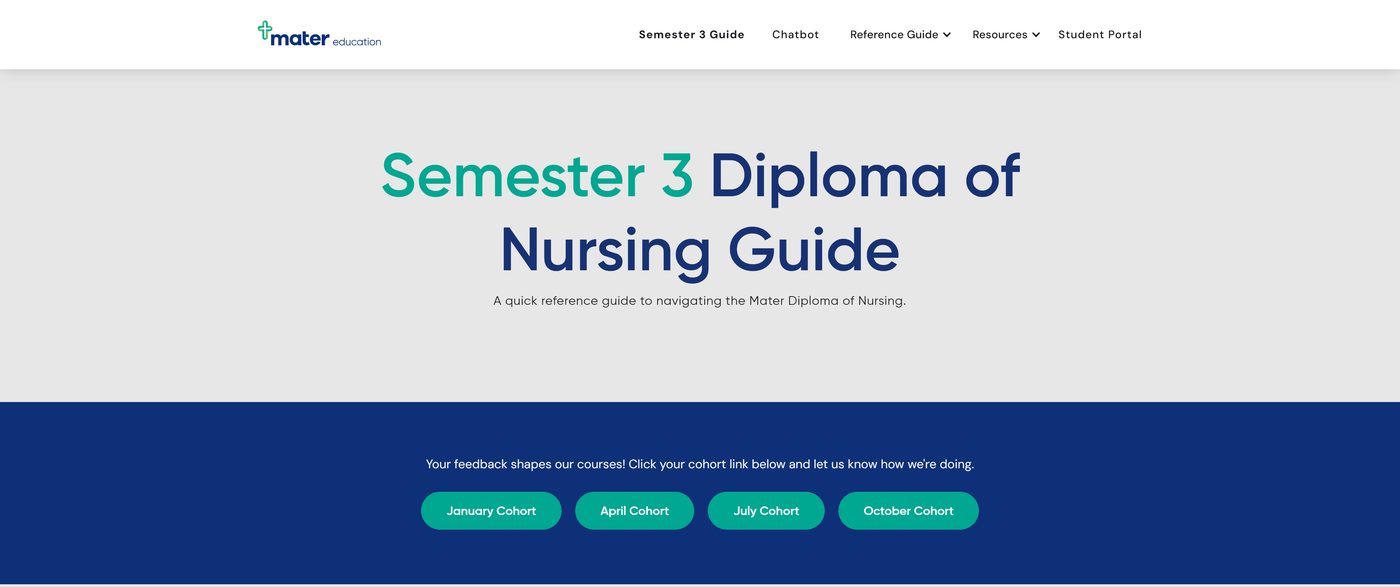 Student Success Portal.